Thursday, 30 January 2014

Senior Kindergarten learns this way...

 Senior KG, its the last year for the children in the pre-primary section. The portion in this year is such that the children are prepared for the next class- Grade 1 or 1st standard. This is done keeping in mind the transition to the next year, which becomes difficult for the children if not done correctly. The atmosphere changes from informal to formal. For example, the furniture itself depicts the change, from small furniture to formal desk and chair pairing. There is only one class teacher per class who takes the attendance and teaches only one subject. The other subjects are taught by other teachers who take turns and teach according to the periods in the time-table.

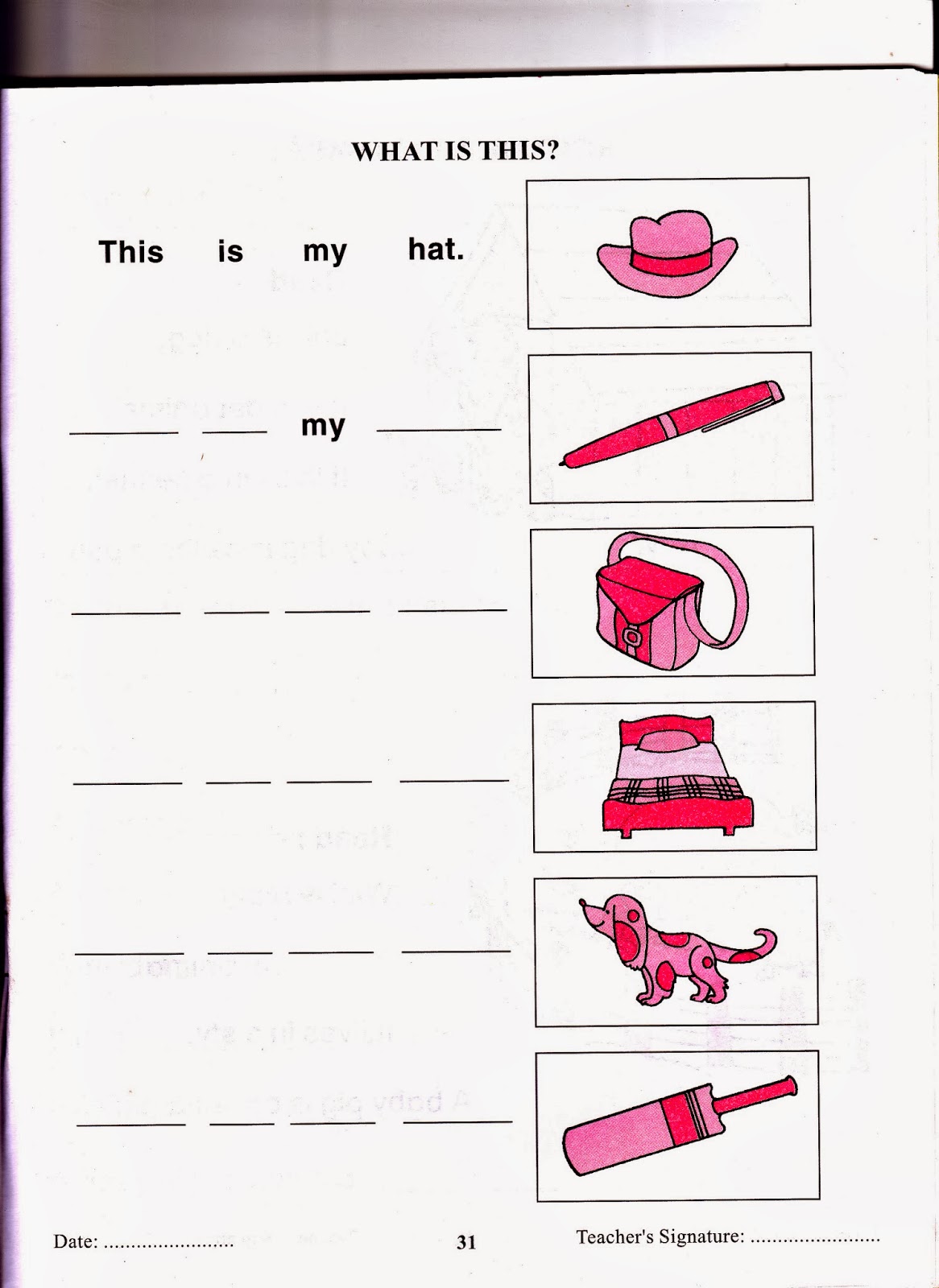
The curriculum is designed according to the skills developed in the Junior KG. Take for instance, in English the children are first made to hone the already learned skills in Alphabets by doing activities aimed at recognising the letters, capitals and small letters, filling the missing letters etc. As an extension, the children then begin to form two letter words such as "at", "on", "in" and so on along with phonic sounds (A E I O U) such as "um", "un"etc. They also learn the three letter word formations soon after. Once they have mastered the skill of forming the two to three letter words they are made to recognise the objects and write down the words they have learnt. Worksheets here are the best source of teaching aids with plenty of scope for creativity. Sentence formation is also introduced to the children this prepares the child for the next year. Question and answer writing is one example for the activity that can be used to teach the children to form and write simple sentences.

 Three letter words

 Object recognition and Writing


 Sentence formation


Shapes and colors are the concepts that are first taught in this year for Maths. The usage of the learnt shapes is further enhanced by attempting activities such as creating designs by combining various shapes. Number value from one to fifty is learnt. Counting is used as a follow up activity once the numbers have been taught and learnt. Missing number, higher and lower numbers, "what comes before and after", simple addition and subtraction with single digits and number names are few of the activities that are done in the Senior KG for mathematics. Concepts of short and long, big and small, heavy and light is also another area that is touched upon in this year. Indeed, these are quite a few things that the child is taught, but it is all taught keeping in mind that the child is entering the formal schooling soon and will have lesser hand-holding.

Missing number writing

Counting and simple addition

In Environmental science (EVS) the concepts of pet, domestic and wild animals are revised. Asking the children to bring along their pets or animals is an interesting way of teaching and making the learning experience fun for the children. Young ones of animals is further explored under the concept of animals. Dramatizing the rhymes and poems, both colloquial and English, is a fun activity done with the children, which gives boost to their creativity and imagination. The plant structure in learnt in detail- like roots, stem, leaves, flowers etc. and fruits. Food and nutrition includes teaching the child the importance of nutrition and important nutrients they must eat such as proteins, carbohydrates, vitamins and minerals. They are educated about the sources of these nutrients. A dietician could be invited to address the children and the parents, which helps answer all the queries by an expert himself!

Such a variety of information is taught to the children that it could be difficult for them to retain it if they do not revise often. After the summer vacation, when the children begin their formal schooling in 1st standard, the teachers must revise what has been taught already in the pre-primary classes. This is very important and goes a long way in acclimatising the children and building their confidence.

Thursday, 23 January 2014

Activities for the Junior Kindergarten

Moving on to the next in line age group-Junior Kindergarten, I wanted to elaborate a bit on the activities that we could try out with them.

One marked difference between the Nursery and Junior KG is that in this year the children are taught to write. Junior and Senior KG sessions are for three hours and requires structured time-table. Junior KG curriculum has more subjects and formal work like reading, writing, Hindi etc. This requires perfect planning and following of the time table. Here the first  period is not free play like that in the nursery class. They begin with the prayer and followed with the attendance. Children then assemble on the floor and start with oral work like reciting the alphabets, counting from one to hundred. This is then followed with formal writing work, alternating with English and Numerical writing exercises.

In English, the kids learn both capital and small alphabets. For each letter, a follow up worksheet is made which has exercise such as matching the letters with the objects, missing letter, recognising alphabets and so on. Apart from the alphabets writing skills are honed by doing pattern writing, repeated alphabet writing etc.

In maths, the conceptual knowledge is given priority in this year. The concepts that are taught include numbers, shapes and sizes, missing numbers, sequencing the numbers and number value too. This is practiced both orally and in writing.

In Evironmental Science, the concepts that are covered in Nursery and repeated but in greater detail. For example, the idea of my family is extended to other relatives like cousins, Aunts and Uncles and many other relatives in the family. Other topics like the plant life, wild animals, infants of animals, food and nutrition, seasons-rain and rainy creatures, craft and drawing. Below are the examples with pictures of various activities that are tried with this age group.

Co-curricular activities are similar to the previous year but are advanced in nature. Dancing, singing, yoga are some of the activities that the children enjoy and look forward to participate in. Annual day in the school becomes an occasion for the children to showcase their talents. The child is given certificates and trophies for their participation. Children also look forward to the sports day with similar enthusiasm. They are encouraged to participate in various competitions throughout the year. This helps the children in self-esteem and confidence.


All these activities and many more are given in my book set "You can do...". For any enquiry regarding this, you could contact me at my email- jjdesai90@gmail.com and jyotidesai@yahoo.com


Thursday, 16 January 2014

Nursery Curriculum broken down for you

A general overview of the subjects for the pre-primary classes was given in my last three posts. The curriculum is so important that I feel spending a little more time on elaborating the activities would help many teachers and parents understand their child's needs and how to fulfil them better.

Nursery is the preparatory year and this class focuses on activity based work aimed at gross motor control, eye-hand coordination, physical, emotional and social development. As given in the previous post, the first period for this class is free play which ensures that the child's attention is grabbed from the minute he enters the classroom when he looks at the variety free play material laid out for him.

Free Play:

Free play is not just any random, aimless game playing but involves plenty of skill development. The child learns through the material laid out for him/ her on the table, such as the play dough, the ring pyramid, blocks, puzzles, inset puzzles for shape, numbers, alphabets and colors and many more. Crayon work also is one of the activities that can be done during the free play time. Threading the beads is aimed at developing and improving the eye-hand coordination.

English:
Next subject that is part of the nursery class is English. This too is taught through activities such as story telling, picture talks, flashcards, books and charts which are all part of the teaching method here. For picture talk, the topics picked are usually something that the child is familiar with like the beach, station etc. At this age, the child's motor skills aren't fine tuned yet to take up writing work. Hence, only recognition of alphabets is done in this class.

Mathematics/ Number work:
Oral counting upto 50 is covered in this class. Only recognition of numbers until 50 is done. No conceptual knowledge is emphasised here as the child is not yet ready for such high level skills. In terms of shapes, the child is encouraged to recognise the basic shapes such as a square, circle etc. through activities like coloring the shapes.

Environmental Sciences (EVS):
This subject is focussed on familiarising the child to his surrounding environment. This not only includes the home and the school but also the outside world. The kids are familiarised with their family and themselves to begin with. Then topics such as rain is introduced. The activities could include the dressing for the rainy season, what does the rain mean and later in higher classes (Junior KG and Senior KG), the concepts of water cycle etc. is taught. Health and Hygiene along with Nutrition is also taught to the children. Excursion to places like bakery, diary etc. are helpful ways to make a lasting impression on the child while teaching about Nutrition. In Nursery, while teaching about animals only the pet animals are introduced as the child would have already experienced seeing the animals in their surrounding. A visit to the zoo is a good way of teaching this concept. Vehicles such as bus, car, cycle are also familiarised to the child. Other topics that are touched upon include-plants, fruits (learnt by visiting a garden) etc.

Extra-curricular activities:
These include activities such as dancing, yoga, singing, physical exercise etc. They help the child in terms of personality development, gaining social skills as they do most of the activities with other children of their age and also involve gross motor skills.

These are the basic activities that can be done with the children at this age. Many more creatively thought out activities can be planned keeping in mind the skills and the level of the children at this stage.

Directions activity
 
 
Finger Painting


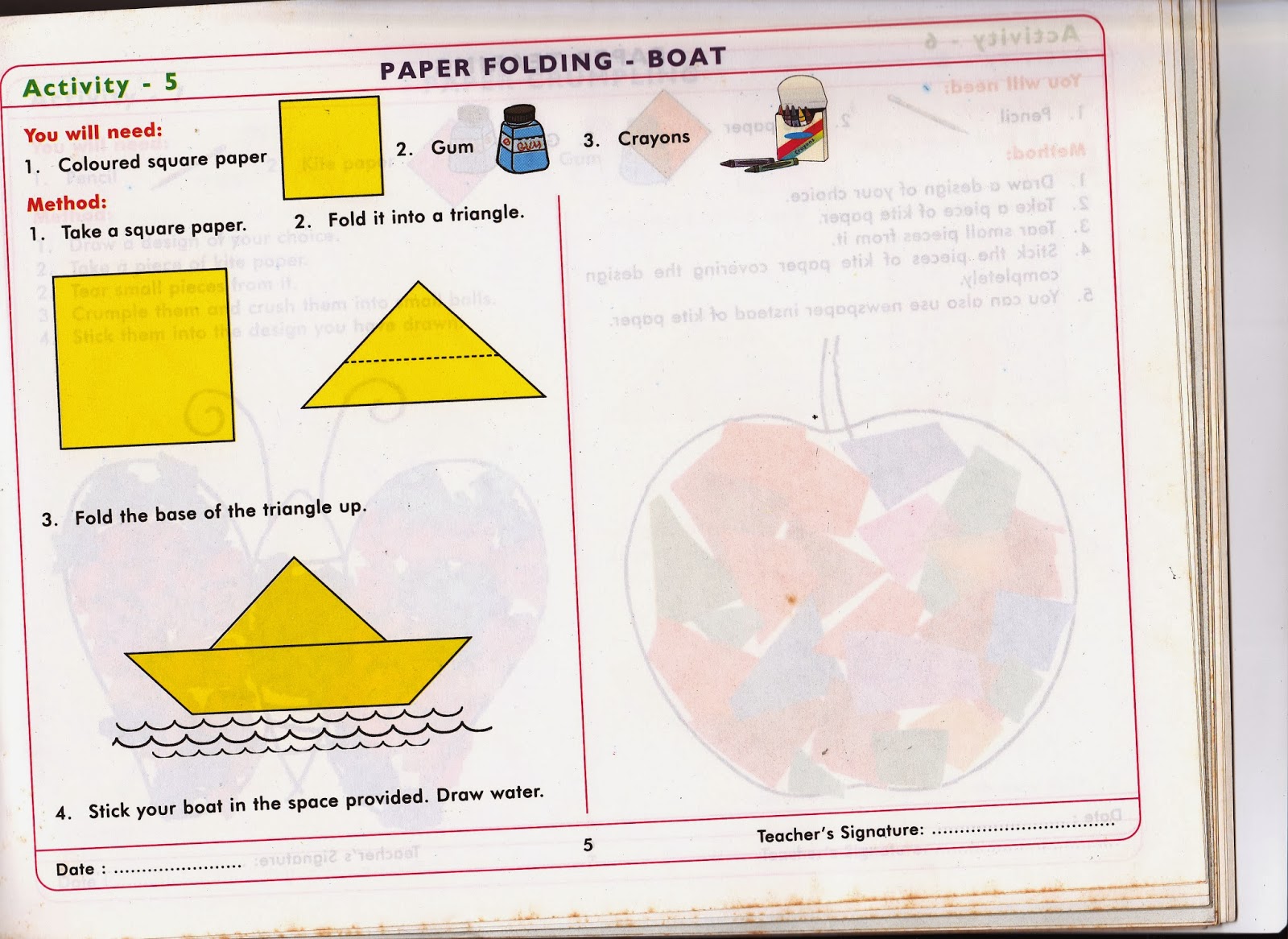
Paper Tearing


Junior KG is another age which has slightly different subjects and ways of teaching the same subjects compared to the Nursery.  My next post would touch upon the activities for the Junior KG.


Thursday, 9 January 2014

Senior Kindergarten time table and curriculum

After the post on Junior KG time table and curriculum, I would like to focus on the Senior KG.

Both the Senior KG and Junior KG time table and curriculum are very similar, except that the Senior KG topics are more advanced. For example, in the subject environmental Science, the children in the Junior KG are taught only about pet animals. Whereas, in Senior KG, the children are taught all the various types of animals such as the pet animals, wild animals and so on. Another example is that when learning English, the children now begin with three to four letter words instead of just learning the difference in Capital and Small letter like in the Junior KG. They also begin the reading work independently. Advanced reading like a story is also taken up here with some help and coaching from the teachers. In number work, the children would have learnt the numbers from one to hundred in the Junior KG. It is now time for them to learn some conceptual knowledge by doing activities like- filling the blanks with the missing numbers, before and after numbers, addition and subtraction, big and small and number comparisons amongst many others. The rest of the subjects remain the same such as drawing and coloring and craft work. Children enjoy narrating stories and reciting poems that they have learnt. This is done as a competition to encourage the children to give in their best and build self confidence.

Senior KG is the last year before the child enters the world of formal schooling. The environment and the methods of learning are very different in the formal classes such as the Class one when compared to the Senior KG. In the Senior KG the learning is based more on activity and in the Class one, the learning becomes more structured and direct. This transition is not an easy task for the children. The teachers must acknowledge the change and the difficulties the children face. In fact, trying to bridge the differences between the two classes becomes a crucial aspect in the teaching. Teachers could consider not starting any structured teaching in the first month of the classes in Class one. This would allow the children to settle down in the new environment and to the new methods.

Since, there is so much importance given to the activities in the three years, I would like to take up the various activities that could be done with the children in each year, based on my book, in the coming posts.


Saturday, 4 January 2014

Junior Kindergarten Curriculum and Time Table

Picking up from where I had left off at my previous post, I am going to elaborate on the Junior KG time table.

Junior KG and Senior KG sessions are for three hours and require a structured time table. Junior KG curriculum has more subjects and formal work like reading and writing in English and introduction of Hindi. It requires perfect planning and following the time table to the T. Now the children are more active and boisterous. Teachers thus have to be better prepared to keep them adequately busy with formal work and fun activities that follow the written work. Some children are slow and need to be motivated. The teachers could be prepared with drawings and follow up worksheets. After the break too, the teachers must plan for activities such as dancing, singing, yoga or number work and number concepts. This is done keeping in mind that the children are more energetic and restless post the break. The activities mentioned would then suit this time appropriately. They also have Environmental science, Story telling and poems, conversations. Children must be allowed to go on the stage and they should be trained to use the Mic. This could help to build their self-confidence. In my school I had gotten a small stage built which could also be used for other activities such as the puppet show. Through the puppet show, the teachers would teach concepts like hygiene, cleanliness, health and nutrition and even fun stories and poems. The teachers were trained in making the puppets and voice modulation that helped make the puppet show entertaining. On Saturdays a "Teacher's Enrichment Programme" would be oragnised by me. Similarly, on the last Saturday of the month a "Parent's Enrichment Programme" for the parents would be conducted. For the Teacher's Enrichment Programme eminent people from the Educational field would be invited to conduct workshops and seminars. The topics of these seminars and workshops ranged from:
1. Making creative teaching aids and Puppets
2. Nutritional and Diet information for the children.
3. Reading and Writing skills to encourage effective learning.

Parent Enrichment Programme topics:
1. Class library and the importance of books.
2. Diet and Nutrition
3. Importance of computers in learning.
4. Importance of Water play and Sand play


Period
Time
Monday
Tuesday
Wednesday
Thursday
Friday
I
9.00-9.30am
Prayer/ Attendence/        oral work
Prayer/ Attendance /    Yoga
Prayer/ Attendance /oral work
Prayer/ Attendance /Hindi oral
Prayer/ Attendance /Yoga
II
9.30-10.30am
Writing work  (English Writing)     
Writing work (Number Writing)
Reading (English)
Story telling/ Poem recitation
Computer Introduction
III
10.30-11.am
B
R
E
A
K
IV
11-11.45am
EVS
Craft
Dancing
Singing
P.T
V
11.45-12 pm
D         I
 S      P     
E        R        
       S
E


* If the teachers are trained in MS Word, Excel or Powerpoint, they could further do worksheets or presentations for the children on the Computer.

Friday, 27 December 2013

Nursery Class Curriculum

By now the children have acquired many skills and are ready for formal studies like reading, writing alphabets and numbers. The academic year starts from Mid-June. The first fifteen days the month could be utilised for settling and revising the previously learned material. Once they have settled down, the teachers can start with the new curriculum. Teachers must have a lesson plan along with the time-table.

Importance of the lesson plans:

Teachers are given the curriculum for the full academic year, which is further divided into monthly plans. This monthly syllabus is planned into weekly schedules. The plans for the next month should be ready by the last week of the previous month. This plan is further broken down into weekly plans which is again followed with daily plans. The academic curriculum and the co-curricular activities are taken into consideration while deciding the time table.

Teachers must prepare and keep all the materials required ready. If the teacher is unprepared with the material, it would distract the children leading them into munching their snacks, talking and playing around aimlessly. Hence, a lot of time would be wasted by the teacher to quieten the class and re-settle the children. But, if the lesson plan book is ready on her table along with the material required for that particular day, automatically a good discipline would be observed in the class. This would ensure that the day scheduled would move forward smoothly. Therefore, planning the lessons is very important. If you already know the topics for each subject then one could prepare apt teaching aids, as the visual aids play a big role in helping the younger children learn better. So, the teachers can be ready with charts, flash cards, models, books from the library and instruments for experiments from the Science Laboratory.

Time Table:

In Nursery, there cannot be a fixed time table, as they need plenty of time for the activities. But, the teacher could prepare a flexible time table for the day and plan the activities, prepare the materials and the teaching aids accordingly. An example of a time table is below.


Period
Time
Monday
Tuesday
Wednesday
Thursday
Friday
I
9am to 9.30am
Free Play
Free Play
Free Play
Free Play
Free Play
II
9.30am to 10am
Oral Work
Oral Work
Environmental Science (EVS)
Picture Talk
Story/Poem Recitation
III
10am to 10.30am
B
R
E
A
K
IV
10.30am to 11am
Physical Exercise
Yoga
Craft
Singing/ Music
Dancing

The teacher must arrange the free play before the children the start coming into the class. The first thirty minutes could be the free play, after which once the children have settled down on the floor the teacher could take the attendance and start with the oral work like recitation of poems, counting numbers, alphabets or introduce concepts. This could be followed by Environmental studies and some related activity such as the clay work. For example, red clay could be used to make an apple for demonstrating the use of the alphabet "A". Coloring, paper tearing, sticking, teaching a song could some other activities to consider. The children could then have a break and during this the teacher must teach them hygiene and discipline such as walking in a line, washing their hands before eating. Nursery children take more time, so encourage them for some physical activity related to music or dance. The nursery session could last upto two hours.

This is about the time-table and planning for the Nursery classes. However, the same information would not be applicable for the Junior and Senior Kindergarten. Following post would highlight the necessary information regarding the Junior and Senior KG time-table.

Here is wishing all my readers A VERY HAPPY NEW YEAR in advance! May the year 2014 be rewarding and prosperous!


Friday, 20 December 2013

Sorry for the break due to unavoidable reasons.

CURRICULUM -

As I mentioned earlier that pre-primary section is not recognized by any board, there are no prescribed study material and guideline.
Each school decides on their own, so the curriculum depends on the creative mind of the head of the pre-primary section. The curriculum should be age appropriate and child friendly. It must have activities which are skill oriented.

NURSERY CURRICULUM-

Nursery is a preparatory year and all the activities are developmentally oriented, vocabulary, finger control, eye' hand coordination recognition of the environment, reading readiness, writing readiness, and physical development.

VOCABULARY-
3 year old child has limited vocabulary and to introduce new words, stories and poems are the most effective way. Also, oral communication and picture talk on different topics is also a good way to introduce new words.

FINER MOTOR CONTROL-
Children's fingers are yet not ready for writing, so for strengthening their finger control and eye-hand coordination as  well as readiness. Activities like crayon work, colouring within the line, play work, puzzles, paper tearing and sticking, recognition of capital and small letters and numbers 1 to 10.

RECOGNITION AND UNDERSTANDING OF THE ENVIRONMENT-
For a child his home and his family is his world, so we must start with Myself and My Family, the names of family members and their relationship as an activity they can make an album of family members with the help of photographs . With nursery children the topic should be such that they can understand, Eg- beach, mall, park etc. While teaching animals start with pet and domestic animals. For such topics taught, teacher must give a follow-up activity like worksheet, colouring, cotton sticking. One day you can ask the children to bring their pet if they have.

PHYSICAL MOVEMNT-
Singing and Dancing must be a part of the curriculum. The steps along with beats not only give them physical movement but a sense of rhythm. Outdoor play for this age group is a little dangerous as each child needs individual attention. Most of the schools have indoor gym of foam blocks of different shapes. And this is used for climbing, walking , balancing etc. Running in circle , hopping on one leg, go to the shapes, colour square, alphabets and numbers. My,"You can Do Activity" series is graded according to the age- Book A is for 3yrs, Book B for 4yrs and Book C is for 5 yrs. Schools are using this set and parents can also use thees at home.

For inquiry and order you can contact me on-
Email : jjdesai90@gmail.com


Thursday, 14 November 2013

More about the Playschool...

In the previous post I shared about the classroom ambience for the age group of six months to three years. Many playschools do not have toddler classes but have a mixed age group classroom for one year to two years and two to three years. For example when we say one year and above, we could have one year and six months children, one year and two months children and so on. The grasping power varies even with these small differences in the months. The teachers must acknowledge this difference and should expect the same level of performance and must not pressurise the child in any way. For this class, the focus must be readiness activities or Alphabet, Numbers, shapes, colours, fruits recognition, paper tearing, colouring, paper sticking, joining the dots etc. These activities are for the development of motor development such as finger and hand control. Some games and outdoor play for physical development could be incorporated too. This is the phase when the child's development is very rapid and children's' retention ability for information is at its best.
The teaching aids become very important. For numbers and alphabets flashcards and charts could be used. Visual aids are an important part of the teaching here. For example, if a teacher is talking about a lion in complete detail but without a picture of a lion, the child might find it difficult to follow. This applies to all new topics such as the number charts, alphabets- both capitals and small etc.
The charts can be put up on the display boards on the wall. Some charts such as the number charts, alphabets charts can be put up permanently in the classroom as a staple. When the child sees the charts everyday in the class, it helps in repetitive learning.

The next age group class is with children of two to three years. This class can be a preparatory class as most of the formal schools begin admissions from three years onwards and have a fixed cut out date to specify age groups. This is to maintain uniformity in the ages of the children in the class. The formal schools begin with the Nursery class at the age of three years. Then, they move on to the Junior KG at four years and at five to Senior KG. Thus, the child spends up to three years in the playschool. Here the teachers who teach could focus on Vocabulary, information about the environment, general awareness, social skills through group activities such as dance, music, drama, sports. This helps the child at the time of the interview before joining the formal schools.

In Nursery class, there must not be any written work. But, writing readiness activities such as using crayons, coloring within the lines, pattern writing etc. and for reading readiness activities such as reading from flash cards, matching, join the dots, colouring the right objects, follow up worksheets etc. can be utilised. A small reader for reading exercise aimed at increasing vocabulary could be done. Now the next classroom is for the Nursery, Junior and Senior KG. Here the set up is formal and the number of children could be 35-40 in each class. The children will require individual tables and chairs and space for oral and floor activities. More details about this classroom ambience will be put up in my following post.

You could now also get in touch with me on my email address: jjdesai90@gmail.com

Friday, 8 November 2013

The Toddler class ambience

After taking the first step by entering the playschool past the entrance, the next step a child takes is into the classroom. Except for the Toddler class all other classes like Nursery, Junior Kindergarten and Senior Kindergarten, have to leave the mother's company at the entrance and then onwards be on their own.

Toddler class room:
The Ambience of the Toddler class should be suitable for the age group. Most of the play schools run in shifts and also share the classroom. Now let us talk about the Toddler class where the age group is 6 months to a year. These kids do not need a formal décor like chairs and tables. Here all the activities are done by involving the mother with the child. Activities for motor control, eye-hand coordination, physical development, listening skills etc. are the focus. Small children need more space to manoeuvre around the class. That is why the "Toddler Class" should be carpeted with only a few equipment.  Here the child is accompanied by the mother and hence they can sit with the Toddler in a circle or a semi-circle, facing the teacher. Therefore, a part of the classroom should be devoid of furniture for the floor activities, oral activities such as poem recitation, story-telling even though the stories may not interest them much due to shorter attention span.
Indoor carpeted floor area
The physical movements are a must between two activities like simply moving in circles or changing their places. The other side of the classroom must be used for physical activities. Slides, Indoor Jungle gyms, light foam shapes with various colored leather cover could be kept in different ways for climbing activities, balancing and other motor and physical activities. Now a days we have plenty of options available for play materials that can help make the classroom look vibrant and attractive. The duration of the class for this age group should be about one hour only as younger children lose concentration and tire easily as well. Therefore, the timing for the play school and activities must be planned keeping in mind the child's feeding and sleeping time.

Foam material play area
Play area created out of light foam blocks
This classroom ambience can be shared with the next age group of one year to 2 years. The same ambience with the same furnitures can be used with few additions such as a table and chair for advanced activities like coloring, sorting, paper tearing and sticking. The toys and play material also should be upgraded as by now the child would have acquired some skills and better coordination and thus can perform on their own. There should not be more than twenty children in one classroom with two teachers. The larger group can be divided into smaller groups of ten children. While one group engages in floor play, the other group could be kept busy with activities such as coloring etc. The duration of this class can be one to one and a half hour.

Some suggested activities for this age group are thumb printing, palm printing, paper tearing, paper crimping, vegetable printing using Ladies finger for example, leaf printing and so forth. These activities along with many others can be found in the Activity set book "You can do".


Thursday, 31 October 2013

Why is the playschool's environment important?

Playschool is the first step for the child into the outside world or an unfamiliar place outside home.
It should be attractive, friendly and welcoming. When the child enters the school for the first time, a teacher's smiling face at the entrance, makes him feel happy and secure. Sometimes when the child is naughty at home the parents themselves or some members of the family threaten the child saying, "Wait, if you do not behave well at home, we will send you to school and then you will see how your teacher will straighten you out." Never try to scare the child like this as he will fear going to school instead of enjoying the experience. Instead try talking to the child about the school being a wonderful place which has lots of play equipment and toys to explore. Emphasise on having opportunities to find new playmate at the school. Talk positively about the school. Try visiting the school before hand, showing the child various attractive areas such as the play area, colourful classrooms, outdoor play area etc. This will help develop a "happy" feel about the school.

What is the first thing that a child sees when he goes to school? It is the entrance, of course. The entrance of the school could be painted with animals, flowers or even cartoon characters to makes it look attractive and colourful. The name of the school should also be displayed at the entrance. This helps the child to form an association with the name of the school and remember it. This comes in handy in case the child gets lost.

If the school has open space, it can be used very effectively to attract children. The open space can be done up with a theme in mind. Various play equipment are available in various shapes and sizes apt for any theme. Consider the swings, slides, Jungle gym etc., which could be part of the décor for the Park theme. Some children would have visited parks earlier with parents and family, the pleasant and familiar experience would make them feel comfortable. This could further encourage the child to attend school and look forward to it.

Now, let me tell you more about the appropriate play equipment. The play equipment must be suitable to the age group as they are not just meant for free play. They are most useful for the physical development of the child. It also facilitates the socialization and teaches him how to share and be patient, while he waits for his turn to play. The same open area can be used for water play, sand play and various planned games. Water play and sand play can teach various concepts like sizes and shapes, eye-hand coordination and motor control. I will discuss in more detail with more examples when I will talk about "Learning through play".

The entrance lobby and waiting lounge for parents must also be done beautifully and interestingly. The information desk should be equipped with informative material about the school, academics, timings of the school, the list material the child must bring to class. For example, some schools do not allow ready to eat food items such as chips, chocolates, noodles etc. They encourage and insist that the child must be given healthy, home cooked food. Communication between the teachers and the parents must be very clear.

The passage leading from the entrance to the classroom can be done up nicely with soft boards which can be used for displaying children's works, circulars, weekly programmes and activities. The pegs for hanging the water bottles should be kept at a lower level so that the child can easy reach it. For this age group, the water bottles and the snack boxes are the most priced possession and they do not like to part with them. Specially the water bottles, since the snack boxes are usually inside the bag. So to encourage children to part with the water bottles, fancy wooden pegs could be put outside the classroom. An individual wooden peg with a big space and sliding slot for the child's laminated photograph with his name could be used to help the child identify his peg. The peg's face could be an animal's face or a Mickey Mouse's face for the boys and Mini Mouse's face for the girls for easy recognition.

What about the playschools in apartments?

Most of the playschools, specially in the Metro cities are run in apartments, which have space constraint. Even if the school is on the ground floor many societies do not allow commercial establishments and activities to take place for the fear of disturbing other society members. The playschools have to then make most of the space that is available depending upon the size of the apartment. All available space can be divided into different areas such as the reception area, office area, activity rooms, Music room, Language room, Number world etc. If the children are separated into small groups for different areas and are moved from one area to another, it helps to maintain their focus as the children at this age have very short attention span. They do not like being cooped up in one classroom for long periods of time. So, if the school interiors are well planned being apt for the subject, the children would enjoy learning. The entrance door could be made to look attractive by giving it a shape of a character with the name of the school. Though it is an apartment door, it must still attract the children. The passage here too can be painted with a theme. It must look different and attractive to the children. Near the entrance there should be a reception cum information desk with sitting area for parents. Some schools have CCTV monitors for parents to observe the child engaged in the classroom. Required number of screens can be displayed on a wall. Behind the reception desk the school activities can be displayed. The passage to the classroom can be utilized very creatively by placing the floor activities like the sand play, water play which come in various shapes and a handy lid to cover the top. The wall behind the sand play can be painted with appropriate themes. For example, if the sand play box is a frog shape the surrounding can be painted with a pond with other water animals around. If the shape is a lion's face, then a Jungle scene can be painted.

So, an interesting and well equipped entrance whether it is a small or a big space is very important to attract the children. Remember learning begins right from the entrance of the school.

 Few pictures are below to give an idea about the various equipment that I have talked about here.

Outdoor Play gyms


Wall Painting
 
 
Soft Boards for the Passage
 
 
Sand Play


 Pegs for Bags or water bottles
 
 
Entrances